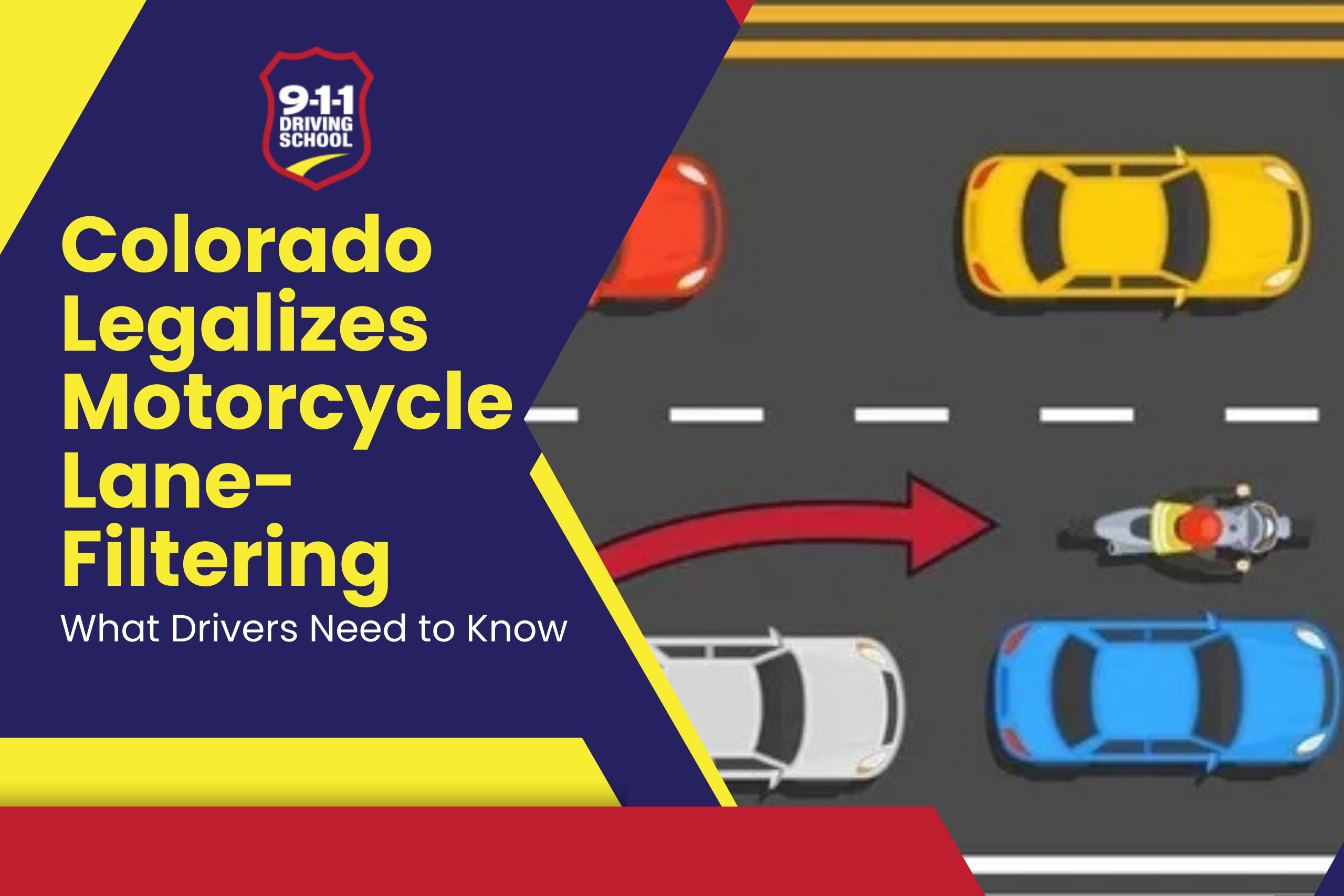
Colorado enacted a new law that legalizes motorcycle lane-filtering under limited and specific circumstances. This change, introduced by Senate Bill 24-079, brings new expectations and responsibilities for both motorcyclists and other drivers. As Colorado roadways adjust to this policy, all drivers must understand how the law works and how it affects safe driving behavior.
Understanding Lane-Filtering
Lane-filtering is when a motorcyclist rides between lanes of stopped vehicles, often to move ahead in congested traffic. It is not the same as lane-splitting, which involves moving between vehicles in motion. Lane-splitting remains illegal in Colorado. The new law allows motorcyclists to filter between cars only when traffic is fully stopped, such as at a red light or during gridlock. This maneuver is intended to reduce the risk of rear-end collisions and improve safety in high-traffic conditions.
What the Law Allows and When
Colorado’s lane-filtering law outlines very specific conditions for legal use. A motorcyclist may ride between lanes only when traffic is at a complete stop and only if there is adequate space to safely pass between vehicles. The motorcycle must not exceed 15 miles per hour during the maneuver. Additionally, motorcyclists may only pass on the left side of vehicles within their same direction of travel. Passing on the right shoulder or between opposing lanes is prohibited.
Once traffic resumes moving, the motorcyclist must merge back into the normal flow. Filtering is not allowed while traffic is in motion, regardless of how slow it is moving. The law clearly defines this boundary to prevent unsafe weaving or aggressive riding behaviors. It also restricts lane-filtering to motorcycles specifically. Bicycles, scooters, and other similar vehicles are not covered under the same provisions.
Trial Period and Enforcement
The law took effect on August 7, 2024, and includes a sunset provision that schedules the legislation to expire on September 1, 2027, unless it is renewed. During this time, the Colorado Department of Transportation (CDOT) will study the impact of the law on traffic patterns and motorcycle safety. Their findings will inform future decisions about whether to make lane-filtering permanent.
Law enforcement will continue to monitor the roads for violations. Motorcyclists who filter outside of the legal parameters—such as when traffic is moving, or at speeds above 15 mph—could be cited for illegal lane usage or improper passing. Drivers of passenger vehicles are also prohibited from intentionally obstructing motorcyclists who are lane-filtering legally.
Why Colorado Made This Change
Lane-filtering is designed to protect motorcyclists from one of their most common roadway dangers: rear-end collisions in stop-and-go traffic. By allowing motorcycles to move between stopped vehicles, the risk of being hit from behind is reduced. Riders can also avoid overheating in summer traffic and reduce exposure to exhaust emissions. These safety motivations were a central reason behind the legislative support for the new law.
The change may also offer broader benefits. Advocates argue that lane-filtering can help ease traffic congestion by reducing the number of motorcycles occupying full lanes. It may also improve the visibility of motorcycles, since a rider moving between lanes is often more noticeable than one sitting directly behind a vehicle.
What Motorcyclists Must Do
While the law offers new flexibility, it does not remove the need for caution. Motorcyclists should only attempt lane-filtering when they are certain all legal conditions are met. They must maintain a low speed, ensure there is enough space to pass safely, and avoid filtering near the edges of the road. If conditions are not ideal, they should wait until they can proceed safely and legally.
Riders must also return to the regular traffic flow once vehicles start moving. Filtering is not a method for sustained lane travel or bypassing traffic. Colorado’s approach is one of controlled, situational use that is designed to enhance safety, not encourage risk.
What Other Drivers Should Expect
Drivers should now anticipate the possibility of motorcycles moving between lanes in heavy traffic. This may be a new experience for many Colorado drivers, but it is now part of normal road behavior under the law. Drivers should check mirrors frequently, especially in traffic jams or at red lights. Unexpected movement near the vehicle can be avoided with increased awareness.
It is important for drivers to remain calm and not interfere with a motorcyclist who is lane-filtering. Swerving, blocking, or opening doors to obstruct a motorcycle can result in citations and may contribute to accidents. The goal of this law is mutual safety, and cooperation from all road users is essential.
As Colorado begins this three-year trial, education and awareness will be key. Both riders and drivers must adapt to the new rules and maintain safe habits. With proper understanding and respect for the law, lane-filtering can serve its purpose in reducing accidents and improving roadway safety for everyone.
Learn more about 911 Driving School: