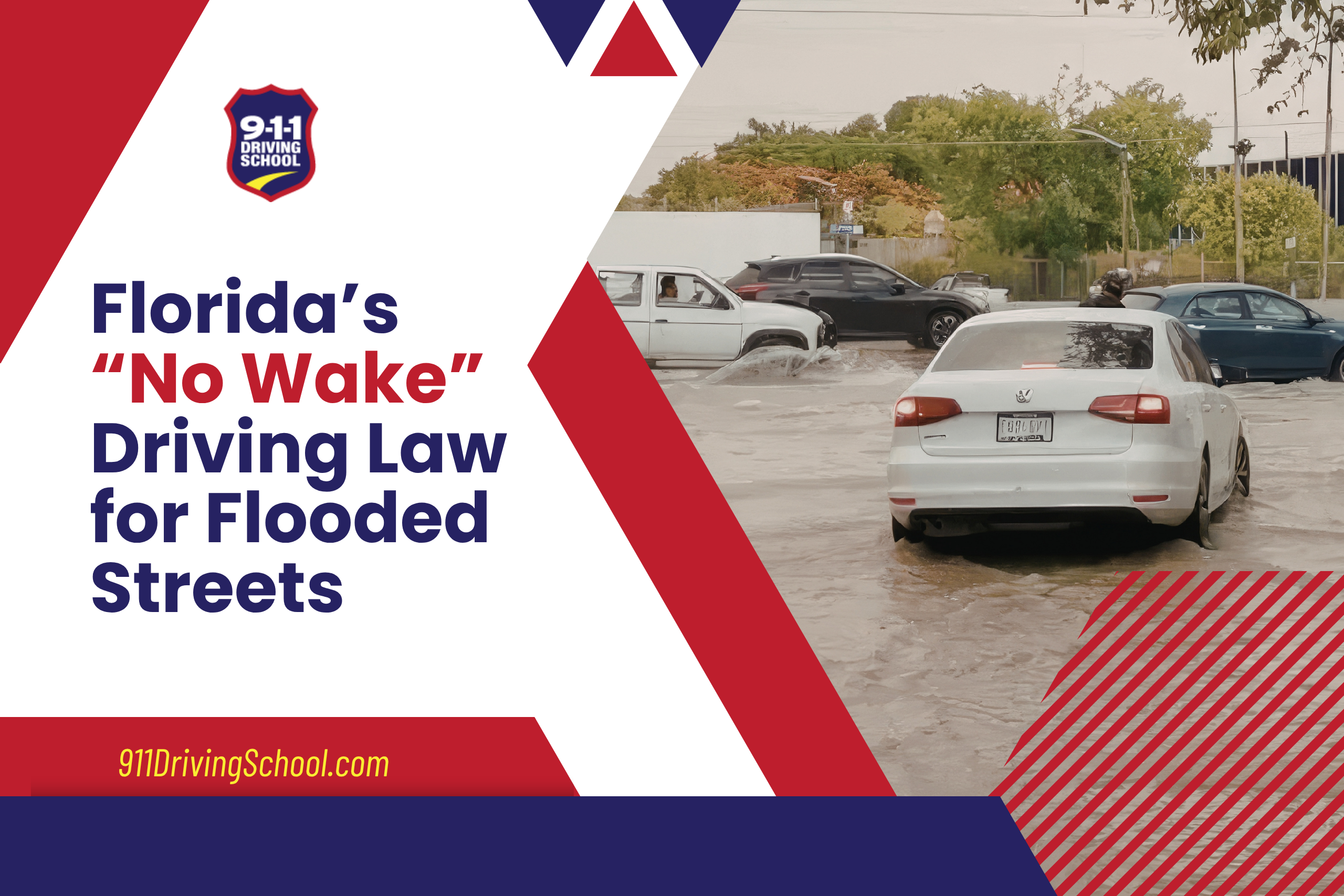
Flooded streets are nothing new in Florida, but the way drivers move through them is getting more attention. Most people focus on protecting their own vehicle, easing through water and hoping not to stall out. What often gets missed is how much force a moving car can create in standing water. That force does not stay under the tires. It spreads outward, and in the wrong conditions, it can end up inside someone’s home or garage.
Florida’s “no wake” law was created to deal with that exact situation. It shifts responsibility onto the driver, not just for where they go, but for what their movement causes.
What the Law Actually Requires
Drivers are expected to move slowly enough through flooded streets that they do not create a wave or surge of water.
• No visible wake pushing outward from the vehicle
• No water forced onto nearby homes, cars, or sidewalks
• Extra caution in marked flood zones where enforcement is more likely
Driving through water is still allowed. Creating damage with it is where the line gets crossed.
The reason this law exists is simple. In many neighborhoods, the street sits close to the structure. It does not take much movement to push water past a garage line or across a threshold. Once that happens, the cost is no longer minor. Flooring, walls and personal property can all be affected in seconds. In some cases, the damage caused by a passing vehicle has been worse than the flooding itself.
Why This Catches Drivers Off Guard
• Most drivers are focused on their own vehicle, not the surroundings
• Speed feels necessary to get through water safely
• The impact of that speed is not always visible from inside the car
That gap between what the driver feels and what actually happens outside the vehicle is where problems start.
A driver can move through the same stretch of water two different ways and get two completely different outcomes. At low speed, the water shifts and settles. At higher speed, it lifts and travels. That movement is what officers look for when deciding if a violation occurred.
What Can Get You Cited
A ticket is based on the result of the action, not just the presence of water.
• A visible wave created by the vehicle
• Water reaching private property
• Direct observation by law enforcement
If those conditions are met, it qualifies as a moving violation.
That matters more than most drivers expect. It can lead to fines, points on a license, and increased insurance costs. It puts this type of situation in the same category as other preventable driving behaviors.
What Changes Behind the Wheel
Driving through flooded streets requires a different mindset than normal conditions. The goal is not to get through quickly. The goal is to move in a controlled way that limits disruption.
A steady, reduced speed keeps water from building and spreading. Sudden acceleration does the opposite. It lifts water and sends it outward with force. Distance between vehicles also matters, since it gives more time to react and adjust.
When water depth is unclear or looks high enough to reach the lower part of the vehicle, the better decision is usually to turn around. Not every road is worth testing.
Why This Law Matters
This law exists because small driving decisions were causing large and avoidable damage. It is not about punishing drivers for being on the road during bad weather. It is about making sure one driver’s actions do not make a bad situation worse for someone else.
Slowing down in standing water is a simple adjustment. The impact of not doing it can be anything but small.
911 Driving School Helps You Stay Safe on the Road
Professional driver education builds skills that support safe driving in real world conditions. Students in Washington, Colorado, Ohio, South Carolina, and Florida benefit from:
Automatic Emergency Braking technology will soon be standard on new vehicles, and responsible driving habits will always be essential. Combining sound driver training with advancing safety technology supports safer roads for all road users.